

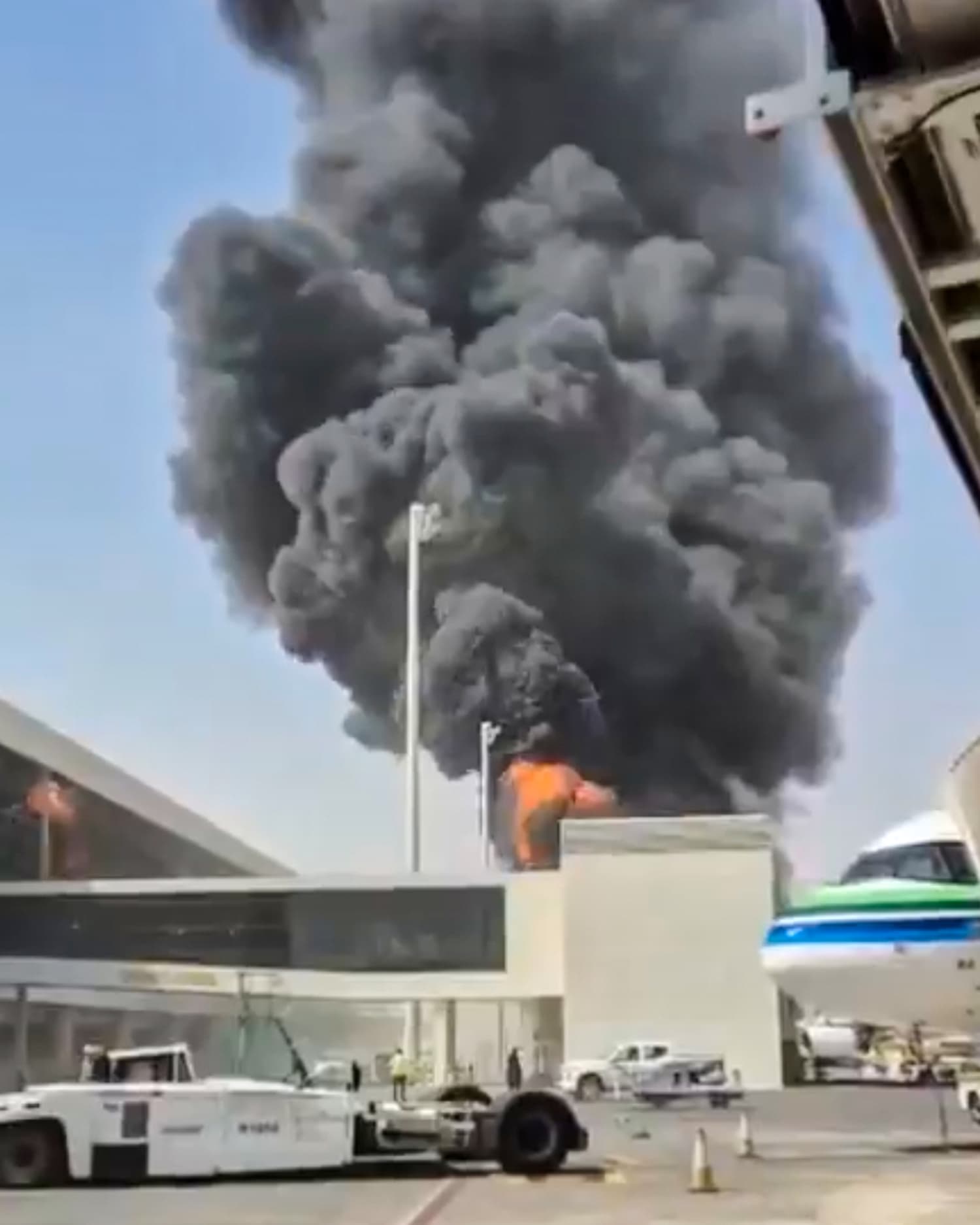
Riyadh’s international airport faced new attacks as it prepares to host the World Petroleum Congress. The death toll had recently risen after 12 people were killed and 309 were injured a day earlier. It was one of the deadliest attacks Saudi Arabia has faced.
The attack caused property damage, and the head of the Houthi media office posted on X that the group had “shut down Riyadh international airport”.
The Houthis also said that airliners should avoid Saudi airspace, declaring it a zone of military operations.
Riyadh responded by promising retaliation against the Houthis with a firm military response and labelled the attack a “full-fledged war crime”.
“There is no way that somebody will break our back. We are like a phoenix, we come out of the ashes all the time,” Prince Abdulaziz bin Salman Al Saud, Saudi Arabia’s Energy Minister, told the conference.
US President Trump called the attack “terrible” and said that he was evaluating whether the US should join the war against the Houthis.
India’s Ministry of External Affairs described the Houthi attack as “dastardly” and added that attacks on civilians “are completely unacceptable and must cease immediately”.
Pakistan’s Prime Minister Shehbaz Sharif wrote on X that “Attacks targeting civilians and vital infrastructure are utterly unacceptable and pose a serious threat to regional peace and stability,”.
Turkey’s Foreign Ministry condemned the repeated attacks, called the targeting of civilians a violation of international law, and demanded that they stop immediately, expressing support to the Saudi government.
The reason why Houthis are targeting Saudi Arabia dates back to the Saudi-led military intervention against the Houthis in 2015 and the support provided to the Yemeni government since then.
They signed a truce in 2022, but the underlying disputes remained unsettled, and it did not become a peace deal.
A Houthi negotiator accused Riyadh of using the truce to tighten its blockade of their territory.
On 20 July, the Houthis retaliated by declaring a naval blockade on Saudi Arabia in the Red Sea.
The attacks are also a response to Operation Dawn of Yemen, launched by its government on 5 October with Saudi’s air support.
Along with the naval blockade, constant strikes on airports and infrastructure put pressure on Riyadh.
CNN’s analysis suggests that the Houthis are following Iran’s method of attacking critical infrastructure to increase economic costs to rival powers.
The Houthis belong to the Zaydi branch of Shia Islam, whereas Saudi Arabia follows the Sunni tradition.
Both sides are Muslims, and the conflict is based on political factors rather than being driven solely by religious differences.
Saudi Arabia is home to Mecca and Medina, two of the holiest sites of Islam.
This is why the strikes that were close to the holy cities were condemned by several Muslim-majority countries.
