

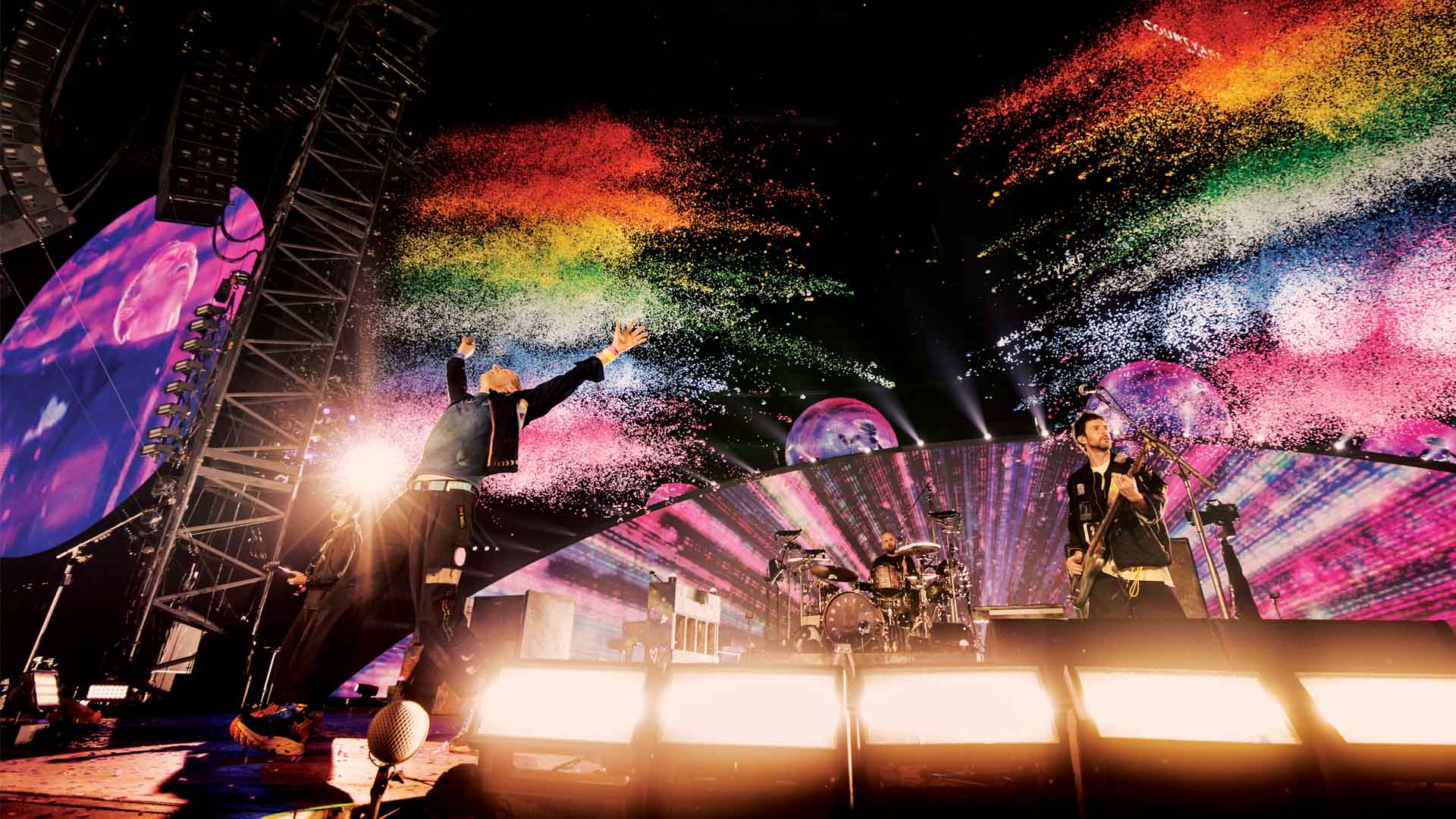
Last January, more than 50,000 people in Mumbai came together to sing along to ‘A Sky Full of Stars’ with the British band Coldplay. In 2024, the feed was flooded with Dua Lipa grooving to bhangra for the famous Levitating × Woh Ladki Jo mashup.
Over the last two years, India has seen a dramatic increase in the number of concerts. In 2025 alone, India hosted over 34,000 live events according to BookMyShow’s Throwback 2025 report.
From Ed Sheeran to Tyla, India is becoming a regular stop for many international artists. Even homegrown artists such as Diljit, Yuvan and Prateek are selling out venues.
So, what exactly is happening to India’s concert economy?
Young India’s New Appetite for Live Experiences
According to an EY-Parthenon report, India’s organised live events market surpassed the Rs 12,000-crore mark in 2024. One of the biggest reasons is India’s youth.
India has a large young population, with roughly 12 crore people aged 18 to 22.
In addition, there is a rising disposable income among the youth in the country. But the biggest shift has to be in mindset.
The youth, especially Gen Z, are increasingly valuing experiences over material possessions. Today, attending a concert is more of a status symbol and a show of fan loyalty than a love for music.
According to CNA, another shift is the credit economy. Many fund their lavish and aspirational lifestyle through loans and credit cards.
The ease with which credit is available through apps has made it popular among youth, who now choose to buy expensive tickets for their favourite artists even if they can’t afford them.
International Artists vs Indian Artists
The biggest buzz is always created when a major international artist announces their India tour. Ed Sheeran, Coldplay, Tyla, Guns N’ Roses, Dua Lipa, Post Malone, Travis Scott and Linkin Park have all created excitement.
Coldplay’s Music of the Spheres tour stop in Ahmedabad in January 2025 remains one of the largest concerts ever held in India, with over 2.22 lakh attendees across two nights.
But the backbone of the concert industry in India remains the native artists. Diljit Dosanjh’s Dil-Luminati tour alone generated an economic impact of Rs 943 crore, EY reports.
Anirudh’s Hukum and XV tours and artists like Prateek Kuhad, AP Dhillon and Arijit Singh also tend to be more cost-effective for organisers. This is because they come with lower expenses than international acts.
The popularity of local artists has also helped the industry grow. A new and interesting trend is the growing appeal of Bhajan clubbing.
Live events centred around bhajans are selling out at ticket prices ranging from Rs 999 to Rs 5,000 or more.
The Economy Beyond Ticket Sales
A concert does not just generate value from ticket sales. According to a BookMyShow report, around 5.6 lakh Indians travelled to other cities to attend concerts.
This means beyond tickets, fans spend on travel, accommodation, tourism and food, boosting other allied sectors too.
Another evolution in the industry is how brands interact with these live events. Earlier, they chose to headline an event or sponsor an ad.
Meanwhile, today they interact directly with consumers by offering exclusive experiences, building interactive zones and creating immersive spaces.
Can the Boom Last?
The live entertainment business is at one of its best times, but also at its biggest cracks. Issues such as infrastructure, ticket scalping, logistics, safety, crowd behaviour and technical failures continue to plague the industry.
This was highlighted when Diljit Dosanjh publicly called out the authorities in Chandigarh for the lack of concert infrastructure.
Coldplay ticket scalping led BookMyShow to file an official complaint as tickets worth Rs 2,500 were reportedly being sold on the black market for as much as Rs 3 lakh.
Over 100 mobile phones were reported stolen at Diljit’s Chandigarh concert, and 32 FIRs were filed over stolen phones at his Jaipur show, highlighting the lack of safety at these events.
For the concert boom to sustain in India, it must address gaps to meet demand. Some artists still hesitate to choose India as a destination because of the lack of proper technical infrastructure and world-class venues.
Investing in better sound and production systems, along with building larger stadiums capable of handling the crowd, is crucial.
The demand for live entertainment is already here, and the industry’s next test is whether it can keep up.
