

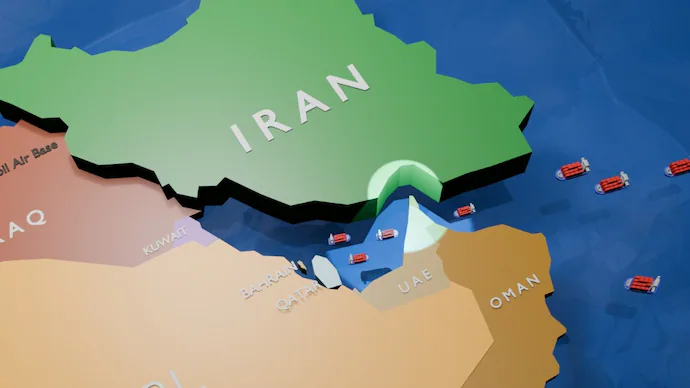
A wide gap between the United States and Iran is preventing the conflict from ending and opening up the Strait of Hormuz.
Qatar asserts that its mediation efforts between Washington and Tehran are ongoing.
Speaking to Al Jazeera TV, Prime Minister Sheikh Mohammed bin Abdulrahman Al-Thani said efforts are ongoing to ensure the situation does not get out of hand.
The Prime Minister said the US is ready for an agreement after the mid-term election held on Tuesday.
The gap is wide as Iran has pushed a seven-day plan since September, asking Washington to lift its blockade of Iranian ports, unfreeze assets and approve a Tehran-backed route through Hormuz to reopen the waterway.
According to Reports, Washington is pressing from another side as the State Department is offering up to USD 20 million for information on Iran’s nuclear programme while Qatar mediates.
Foreign Minister Abbas Araqchi said, “Tehran was prepared for both defence and diplomacy.”
Iranian and Qatari negotiators had drafted a proposal to reopen Hormuz within two days of an agreement with Washington, CNBC reports.
On Tuesday, Qatar said both sides were reviewing proposals and had agreed to avoid escalation.
But, in West Palm Beach, Florida, Trump told reporters, “They knocked out – they built a little bit of an anti-aircraft device, and we knocked it out in about 15 minutes, maybe five.”
President Trump made his comments after Iranian media outlets announced the launch of two missiles at the Suza region on Qeshm Island in the Strait of Hormuz.
According to state television IRIB, the Iranian army has also issued a statement regarding the downing of an American-made MQ-9 drone by Iran’s air defence systems on Qeshm Island.
Regarding reports from Qeshm Island, US Central Command said the situation is relatively calm.
“We are aware of the incident but have no further comments,” an official told Al Jazeera.
Why India is watching
Iranian lawmaker Ahmad Hayat-Moghaddam said ships from India, China, Iraq and Qatar are exempt from the strait’s restrictions, adding that vessels from these countries pass freely.
India’s exemption was meant to ease medicine imports, Ahmad added.
India imports about 90 per cent of its crude, and around 30 per cent of that currently passes through Hormuz.
About 90 per cent of its LPG imports and more than half its LNG imports from Qatar and the UAE also use the strait.
An analyst quoted by Al Jazeera said including Qatar and India helps Iran undermine acceptance of Washington’s strategy.
Qatar shipped no LNG through the strait in August but moved 1.8 million tonnes in October.
The question for India is whether a stopgap exemption can hold if talks fail.
Tehran’s goodwill is not a guarantee, and earlier clearances for Indian ships were reportedly handled case by case.
A deal that reopens the strait for everyone would help India more than a favour that can be withdrawn.
Business Recorder reported that Brent crude was on course for its biggest weekly fall since 2020.
The decisive factors now are whether Washington accepts any version of Iran’s Hormuz route, and whether Trump follows the midterms with new strikes or more talks.
