

Putin calls it “complete nonsense.” His own government’s recruitment numbers tell a different story, one where Russia is running out of men to send to the front.
Ukraine claims that Russian personnel losses are 1.49 million between February 24, 2022 and September 4, 2026. President Volodymyr Zelensky says the toll is forcing Moscow’s hand, pointing to what he called “peripheral mobilisation.” “We believe it will not take place in the central cities,” he said. “But I don’t think they will be able to hide it very well.”
Russian President Vladimir Putin is expected to win the upcoming election set for September 18th to 20th. However, he needs a clean win with support and stability.
A mass mobilisation order before the war is an unwise choice for the image Russia wishes to portray. The timing is imperative here because it is not just a military decision, but a huge political risk.
Although the idea of mobilisation is deemed ‘nonsense’ by Putin, it could be a repetition of 2022. In September 2022, Putin had promised to avoid conscription before ordering a partial mobilisation.
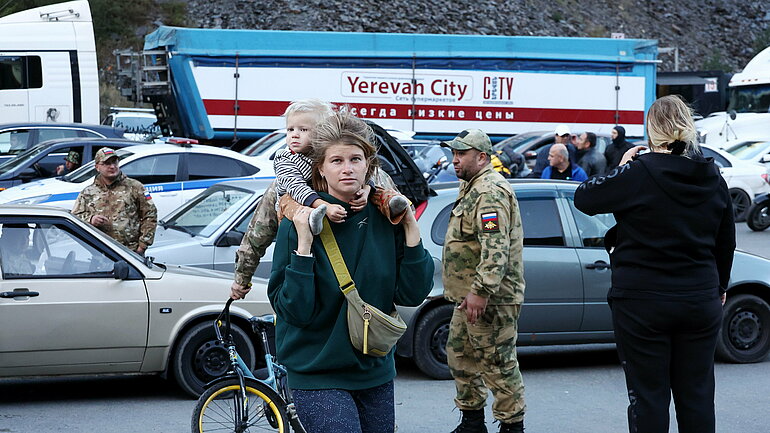
The partial mobilisation caused the chaos of September 2022 and migration to Georgia. Similarly, more than 113,000 Russians migrated last week via the Upper Lars checkpoint to Georgia.
According to Western officials, there is a drastic shortage of manpower to wage an effective war. Russia is losing about 6,000 more troops each month than it can recruit.
Recruits from foreign nations such as Africa are lured with promises of employment and bonuses to the front lines. Yet the gap between losses and recruitment of soldiers remains unbalanced.
This has forced Russia to target regional authorities for recruitment and increased incentives, including a “bring a friend” scheme. The scheme pays more for every person a resident persuades to enlist.
In recent months, the aggressive military recruitment methods and data collection have increased fear among Russian citizens. Potential recruits have been summoned to police stations under bureaucratic pretexts. They are then beaten or threatened to sign a military contract.
“The problem for the Kremlin is getting much harder to find people willing to fight, even for crazy money,” said Aleksei Tabalov, a human rights activist and director of an organization that helps Russian conscripts.
According to Mikhail Liberov, from the School of the Conscript rights group, this group includes drug addicts, alcoholics, mentally unwell people, those with large debts and migrants “who don’t speak Russian or barely know what’s actually written, and are also afraid of deportation”.
“I’ve already accepted that mobilisation will still happen, unless something happens that forces Putin to end the war in Ukraine,” said Liberov.
Passive approval of a war fought by soldiers and volunteers is not the same as a mass mobilisation that reaches every citizen. The 2022 mobilisation was chaotic despite high approval numbers, and the same would repeat if draft notices and recruitment reach every corner.
