

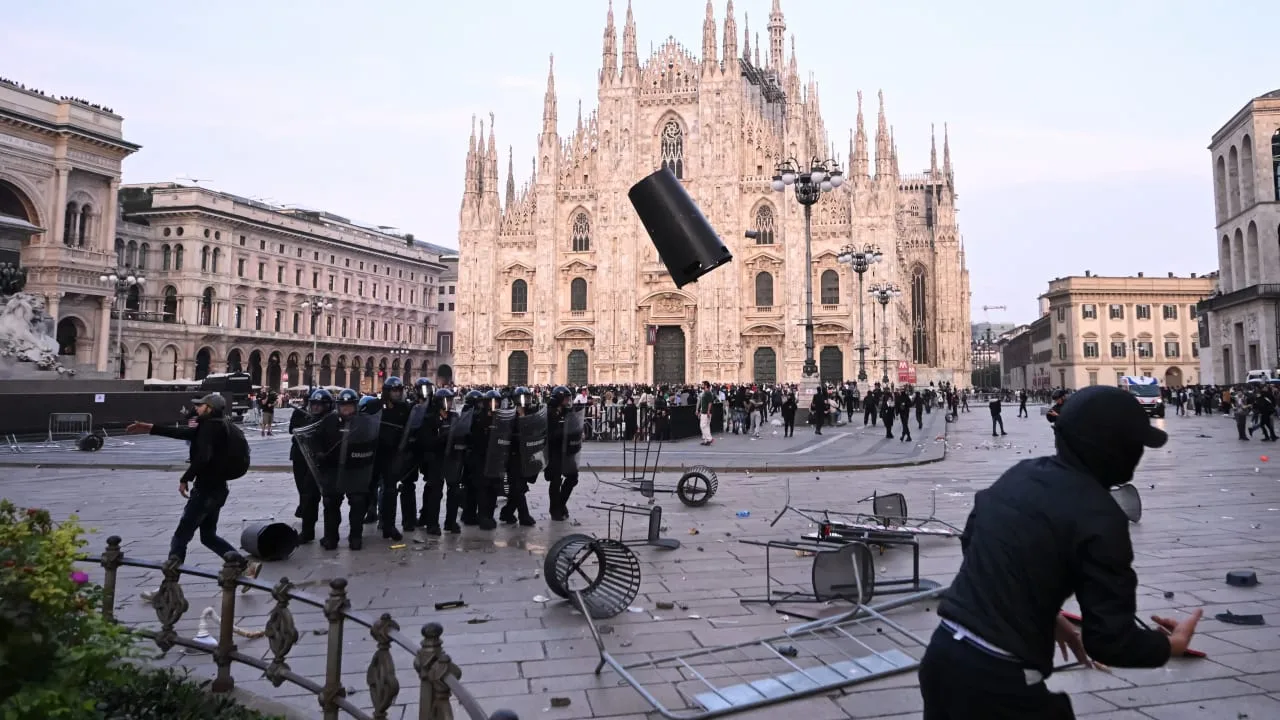
Italy’s youth are angry about what they can afford today and what they expect tomorrow. Students marched in Rome, Milan, Bologna, Turin, Genoa, Pisa and Naples on 16 October under the banner “No Meloni Day.”
Demonstrators cite rising living costs, low wages, high rents and failing public services. Many young Italians say they no longer expect to be better off than their parents.
Most of the marches passed peacefully, with only isolated clashes with security forces.
In Rome, thousands of young people walked to the Education Ministry, where some set off firecrackers against its facade.
Student groups also demanded that money earmarked for rearmament go to schools.
One group argued that 13 billion euros in military spending should be redirected to education.
Italy is bracing for an “autumn of discontent” after an energy-driven inflation spike, with students, truckers and farmers protesting ahead of next year’s elections.
Wages and productivity have stagnated for decades, and the Parliamentary Budget Office says real wages fell 6.6 per cent between 1990 and 2026.
Christian Ferrari of the CGIL union described “a dramatic economic and social crisis.”
A 22-year-old protester named Riccardo told AFP the country needs a new autumn movement after decades.
Students have also pitched tents in Rome, Milan and Bologna over the cost of living and studying.
Police used water cannons and tear gas on rioters in central Milan who looted shops and set fires.
Interior Ministry figures put the number of injured officers in Milan at 14. Of roughly 50 people arrested, more than 30 were minors.
Prime Minister Giorgia Meloni has tried to separate protest from disorder.
After the violence, Meloni called the presence of young rioters “painful and frightening” and said the government wanted to stop those images from becoming a model for others.
In unveiling her decree, she said: “Vandalism and theft are not protest, they are criminality.”
The decree is where the debate over police powers begins, sending 500 more soldiers to Milan.
This creates a new offence of violent participation in a demonstration, carrying up to five years in prison.
Parents become liable for damage caused by minors, and anyone over 14 is presumed to understand their actions unless proven otherwise.
The army’s role is unclear, since the cabinet stopped short of giving soldiers extra policing powers after objections from President Sergio Mattarella.
Critics warned the decree risks intensifying protests and leading to thousands of arrests on ill-defined legal grounds.
A generation raised on promises of upward mobility is protesting rents it cannot pay and wages that do not stretch with the government’s most visible answer so far is tougher policing.
Whether Rome also offers a response on housing and pay may decide how long this autumn lasts.
