

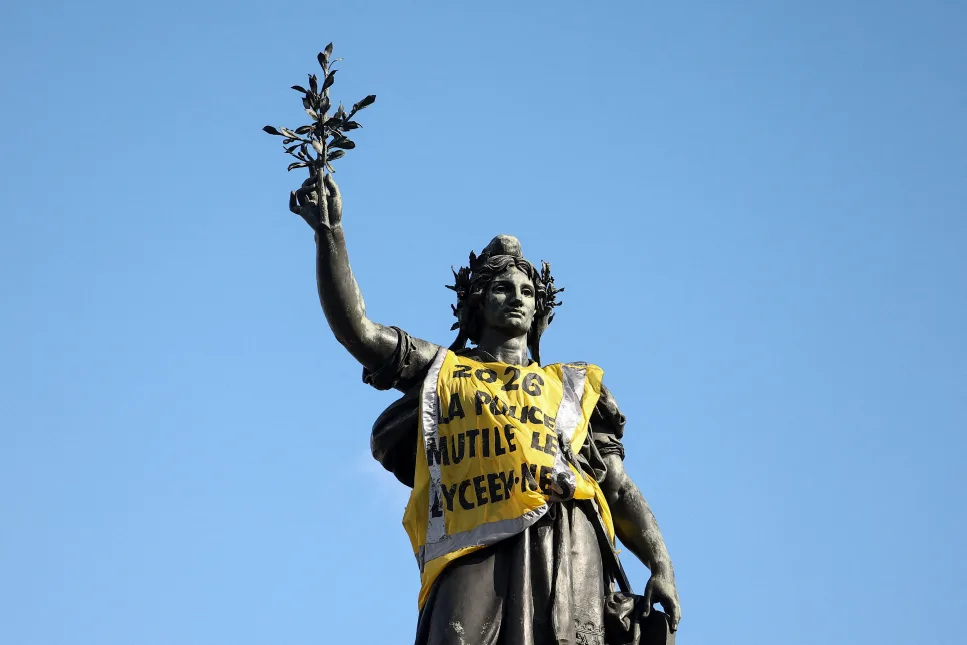
France’s education and cost-of-living protests have escalated into nationwide unrest, with curfews, more than 2,400 arrests, and violence now spilling beyond its borders.
French Prime Minister Sébastien Lecornu stated, “We have a mess on our hands, to put it bluntly.”
French officials have imposed curfews after more than 2,400 people were arrested, along with other cases of serious injuries and two deaths over the weekend.
Paris police announced an overnight curfew from 11 pm, and Lecornu credited the “targeted curfews” with keeping the night calm.
Although most of the protests have been peaceful, shop break-ins and destruction of government and historic buildings have dominated the headlines.
In Paris, masked groups looted shops and started fires; protesters in Lyon torched the tourist office, and the spire of Limoges’s 143-year-old town hall collapsed in flames.
This has threatened tourism, one thread that France’s economy was holding tight onto.
US Vice President JD Vance posted the burning Limoges town hall on X and blamed failed immigration policy for the violence during the protests.
Lecornu blamed at least some of the unrest on “an ultra-left movement” and said the government was ready to impose a national state of emergency if needed.
By the end of the weekend, the blame was on authorities for some residents and on the looters and rioters.
Interior minister Laurent Nunez offered his resignation, saying he failed to contain the riots.
President Emmanuel Macron rejected Laurent resignation, saying immediate leadership of law enforcement is needed.
The minister was formerly accused by political rivals of not preparing adequately for the scheduled protests.
“Those who sought to bring down the Republic will be held accountable, while blaming much of the violence on far-left activists,” President Macron said.
Macron also added that he will hold meetings to discuss the protesters’ demands and that he would take international initiatives for a stable fuel supply.
The main student union UNEF has called for more protests on Saturday, and the CGT trade union plans to join, calling for peaceful demonstrations.
Lecornu said the government will deploy a “massive” security presence and has planned to use the military to help maintain order.
The protest wave from France, India, Chile and Spain inspired movements in Italy and Albania.
In Milan, masked rioters clashed with police, looted stores and set property on fire.
Milan police said 271 people were arrested, most of them minors, and 14 officers were injured over two days.
Albania’s education protests over university conditions and fees have demanded the resignation of their prime minister, Edi Rama.
Demonstrations in Tirana turned violent, with one person photographed throwing a Molotov cocktail at riot police.
