

Drunk-driving cases topped emergencies at Coimbatore Medical College Hospital during Diwali, while the city’s AQI touched 194, in the “Moderate” category, officials said on Sunday.
Coimbatore celebrated the festival of lights at the cost of crowded casualty wards, road accidents, and the environment.
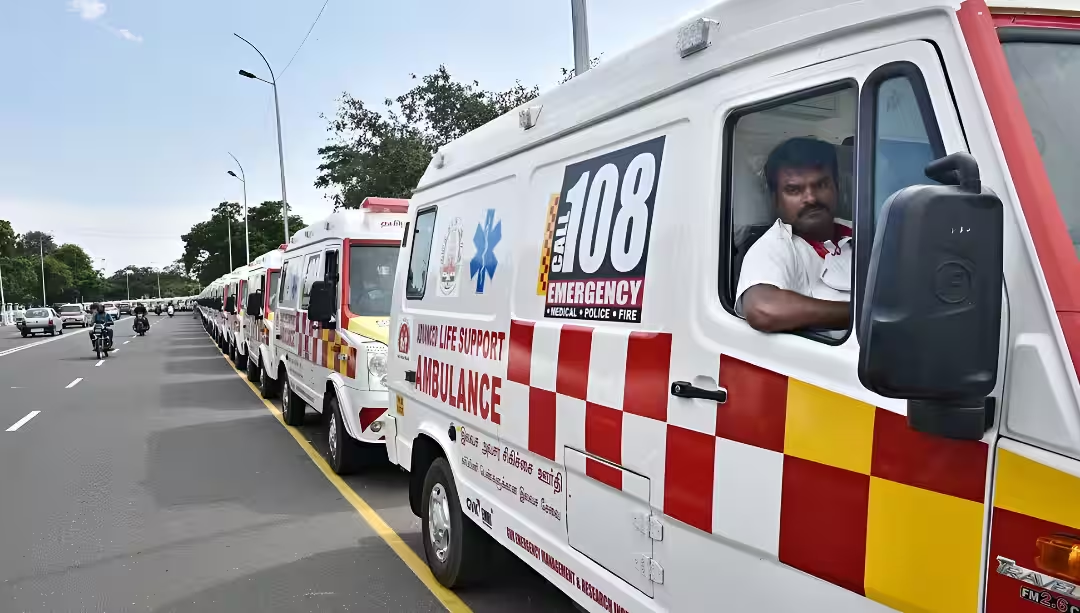
Around 108 emergency ambulance services prepared 440 ambulances for Diwali emergencies in Coimbatore, according to the ET Government.
Joint Director of Health Services Dr V. Sumathi directed government hospitals to stay on alert, strengthen emergency arrangements, and keep burn wards and trauma emergency departments ready.
An orthopaedic medical intern at Coimbatore Medical College Hospital (CMCH) told The Public Brief that six to seven patients have been admitted to the red zone on Sunday.
“During the celebrations, drunk-driving cases were the most common emergencies brought to CMCH, outnumbering burn and bruise cases,” she added.
One patient had a crash fracture, a serious injury caused by high-impact trauma in a vehicle collision, Casualty Medical Officer told The Public Brief.
But not every danger on the road began with a drink. Some risks began with families bursting firecrackers on the road.
Children, sometimes accompanied by adults, lit crackers on the road in front of their homes and on footpaths close to moving vehicles.
The celebrations forced vehicles to stop and blocked narrow alleys. Crackers lit next to passing vehicles can easily cause a fall or a dangerous swerve.
The accidents carried the immediate cost, and the air carried a slower one.
According to the Tamil Nadu Pollution Control Board (TNPCB), the AQI in Coimbatore was 194 at 11:00 pm on Diwali night and 169 at 12:01 am on November 9, both in the “Moderate” category.
TNPCB’s 2025 Diwali reports show that the highest AQI reading was 160 on October 20, the day of celebrations, as levels decreased enough to reach Good on October 22.
An official statement from Kumaran Hospitals warns of potential breathing discomfort for patients with asthma, chronic obstructive pulmonary disease (COPD), bronchitis, and heart disease during a Moderate AQI.
