

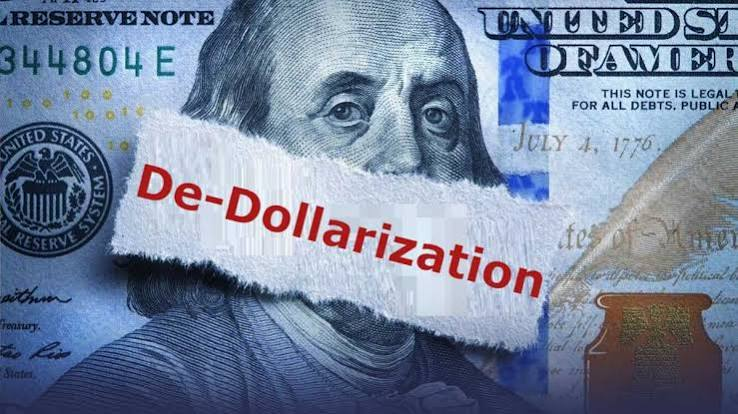
Over the weekend, BRICS nations agreed to expand trade and payments settled in local currencies. Analysts are calling it another step toward de-dollarisation as the bloc tries to counter an assertive United States under President Donald Trump.
BRICS countries agreed on Saturday to expand trade and payments in local currencies, making another step towards de-dollarisation as the bloc seeks to counter an assertive United States.
The agreement forms part of the New Delhi Declaration, issued during India’s chairmanship of the bloc, and calls for a faster, cheaper payments system while pushing back against sanctions and unilateral tariffs.
Member states reached this consensus despite genuine diplomatic differences and pressure from Washington found common ground to overcome some of their biggest diplomatic splits.
The details emerged in a joint statement from BRICS finance ministers and central bank governors on September 10.
Members said they were studying how national payment and messaging systems could work together, and pledged to encourage trade and investment settlement in local currencies.
Members were examining the interoperability of payment messaging systems and promoting trade settlements and investment using local currencies, BRICS finance ministers and central bank governors said in their joint statement.
The statement avoided prescribing one model for every country, calling instead for flexibility given how different BRICS economies are from each other.
They also stressed that there was “no one-size-fits-all” approach and called for payment mechanisms that are “fast, low-cost, accessible, efficient, transparent and safe”.
Where India stands
For India, this looks less like a confrontation with Washington and more like an exercise in managing risk.
The rupee-based settlement could support exports and reduce exposure to dollar-related sanctions, but persistent trade imbalances pose a major challenge.
Most analysts doubt the bloc will ever settle on a single shared currency. Central bank digital currencies and linked payment systems are seen as a more workable path to reducing reliance on the dollar.
A common BRICS currency remains unlikely, while CBDCs and interconnected payment systems could offer a more practical alternative.
“India has no formal strategy to replace the dollar as the world’s reserve currency, arguing that its stability supports the wider global economy,” External Affairs Minister S. Jaishankar said.
This puts India in a different place from Russia and China, both of which have pushed harder and moved faster to settle bilateral trade outside the dollar system, he added.
Washington is watching closely
The debate has already drawn direct warnings from the White House.
BRICS effort to challenge the dollar’s role in global trade would be met with steep tariffs, treating dollar primacy as something I will not negotiate on, said US President Donald Trump.
He has repeated that threat on several occasions, including a warning of 100 per cent tariffs on BRICS exports if the bloc formally tries to displace the dollar.
So can BRICS actually pull this off?
