

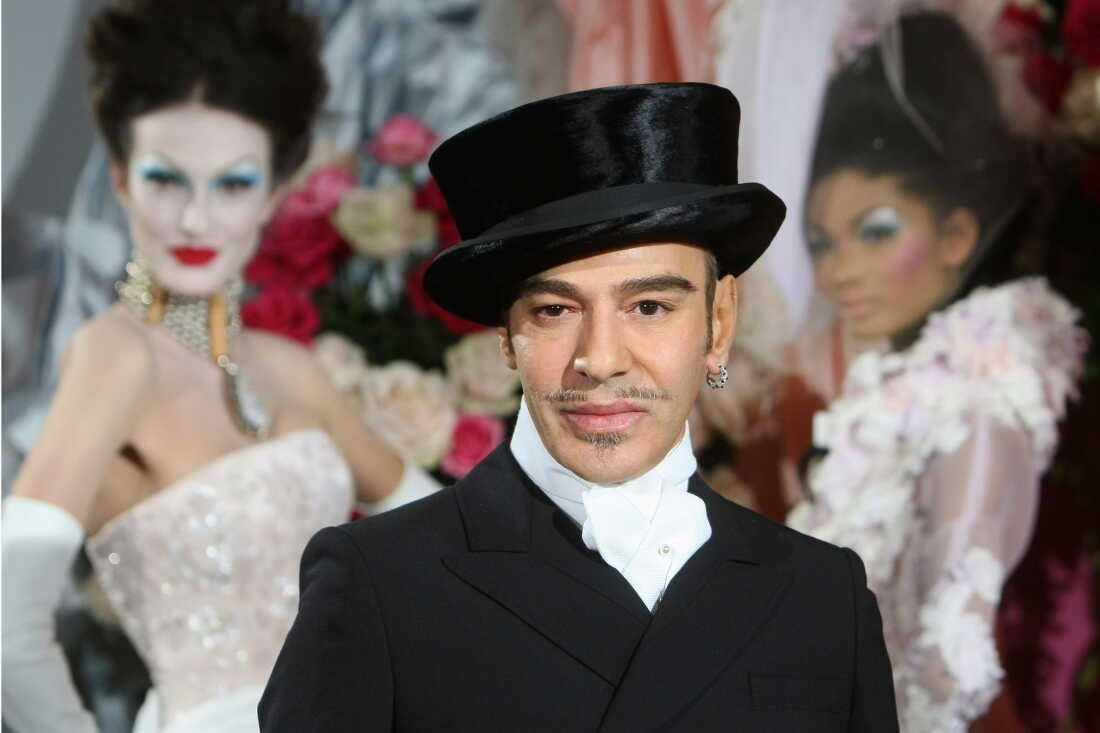
British designer John Galliano has decided to cancel the upcoming costume exhibit John Galliano: Horizons just a month after its announcement. The reversal came after the growing backlash against his anti-semitic and racist remarks for which he was convicted in 2011.
The Metropolitan Museum of Art had announced a spring 2027 exhibition to honour Galliano for his legendary career. The exhibition was also supposed to serve as the theme for next year’s Met Gala.
But after the announcement, many Jewish leaders and public officials expressed their disappointment at the Met’s decision.
The Met Gala, held on the first Monday of May, falls on May 3 next year, which also marks the start of Yom HaShoah, or Holocaust Remembrance Day. The timing has drawn intense scrutiny and prompted calls to cancel the exhibition.
In an Instagram post released on August 31, John Galliano said that “I have decided with great sadness that the exhibition shouldn’t take place at this time.” He apologised for the “pain caused by his words to the Jewish and Asian communities.” He added that meaningful atonement is a continued response and expressed his gratitude to the Met.
The Incident
He had not one but three separate incidents of anti-Jewish hate.
In February 2011, outside the La Perle Bar, the French couple said that Galliano repeatedly used anti-Semitic and racist slurs.
According to Geraldine Bloch, Galliano used words such as “Dirty Jewish face, you should be dead” and told her Asian friend, “*** Asian bastard, I will kill you.”
He made 30 anti-Semitic slurs in a span of 45 minutes. This led to his arrest in Paris soon after, following another report that came out about a woman who said she had faced similar slurs from him in October 2010.
The infamous video also surfaced, in which he was seen saying, “I love Hitler,” while appearing heavily intoxicated. He was fired by Dior and faced a trial in June; he was found guilty and ordered to pay a lb 6,000 fine.
Throughout the trial, he argued that his addiction had caused him to make the remarks and checked into rehab not much later.
The Pressure Behind the Decision
While returning to the fashion world in 2014, many are confused about why the issue is coming up now. One of the biggest reasons is the timing. Critics argue that amid the rising anti-Jewish sentiments across the world, honouring a known anti-semite was a poor decision by the Met.
The New York Times reported that many donors had contacted executives and threatened to withdraw support if they went ahead with Galliano.
It also revealed that dealer Arne Glimcher, the founder of Pace Gallery, had emailed Max Hollein that he and his wife were ‘seriously reconsidering other works that have been earmarked from our collection to the Met in our wills’. The growing backlash, specifically from donors along with Jewish leaders, prompted this decision and a public outcry.
This has once again brought cancel culture into the limelight, with many defending the designer, citing that Galliano already apologised and repented for his outburst. But it raises the question of who gets to decide when someone has done enough or repented enough.
Ultimately, should any artist, however legendary, be remembered for their art alone, or also for their actions and words, especially those rooted in hate?
