

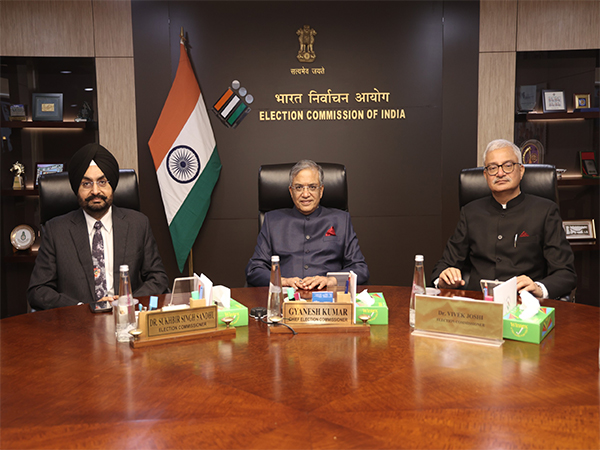
The Election Commission of India (ECI) is facing fresh scrutiny after a report claimed two commissioners objected to several decisions on voter registration, deletions and electoral data. The ECI has denied any internal rift, calling the report misleading.
India’s Election Commission is the latest flashpoint in a growing political row, as of late September 2026.
Here’s a look at what’s going on:
It all started last week, when the Indian Express reported that two of the three ECI members — Sukhbir Singh Sandhu and Vivek Joshi — have formally objected to at least 14 decisions made by the poll body in the last 10 months, based on its review of internal records.
The objections reportedly included voter registration, deletion and restoration of names, changes to the voter-registration process, and centralisation of electoral data.
What makes this one noteworthy
While criticism of the ECI isn’t unusual, this particular dispute has drawn attention to the fact that the sharpest objections have come from within the Commission itself, rather than from outside.
The row comes on the heels of a much bigger controversy over the Special Intensive Revision (SIR), the nationwide effort to clean up electoral rolls and remove dead, duplicate and ineligible voters.
There are concerns that eligible voters could also be wrongly struck off, affecting election results, and more than 13 crore names have been removed from draft voter lists nationwide.
The ECI has denied the Indian Express report, but other sources say no commissioner filed a formal dissent; only observations were considered.
Opposition figures have jumped on the ECI’s denial, with Congress leader and LOP Rahul Gandhi demanding Chief Election Commissioner Gyanesh Kumar resign, saying “elections are fundamentally broken,” and linking it to his “vote chori” campaign.
Some opposition leaders have called the alleged ECI actions an “act of treason,” and a CPI(M) Rajya Sabha MP has asked President Droupadi Murmu to intervene.
The ECI has argued that the report is a case of inflating routine internal discussions into a manufactured institutional crisis, it said.
Government-aligned sources have also dismissed the report.
Beyond the immediate issue of the dispute, the bigger issue is who controls the machinery that creates, alters and corrects India’s electoral rolls.
This is a dispute that has direct implications for public trust in upcoming elections, and the fact that there’s a history of friction between the ECI and some members of the political establishment (notably, in an earlier controversy over the 2024 general election that accused the ECI of colluding with the ruling BJP, which the ECI has firmly denied).
As of this week, the story is still contested, as opposition parties are demanding accountability, while courts have ruled in favour of the ECI on the legality of the SIR process, but there’s more public and political scrutiny of how it’s being done.
