

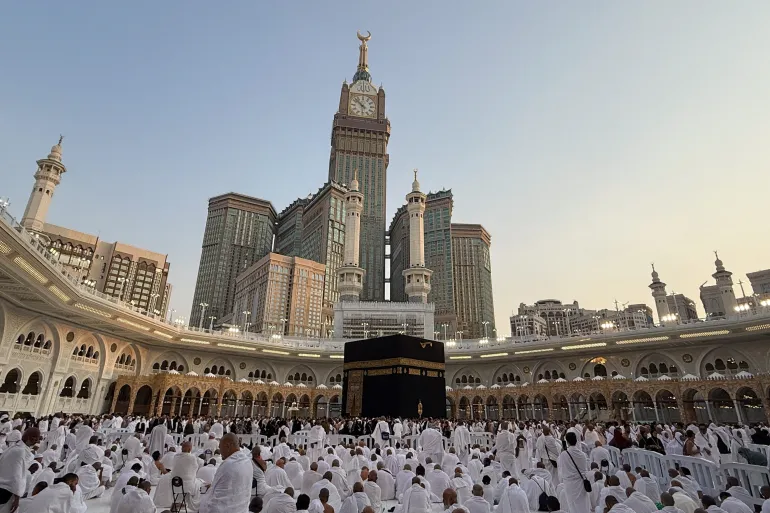
Air defence forces intercepted and destroyed a drone launched toward Mecca on Tuesday evening, preventing it from entering the city’s restricted airspace, Saudi Arab officials say.
Riyadh issued a security alert following the interception for the first time since the Houthis’ attempt to target the sacred site in 2017, but Houthis have denied targeting the holy site.
Houthi spokesperson Yahya Saree dismissed the Saudi reports, saying they were a setup for misinformation, claiming, “The fabrications and lies propagated by the criminal Saudi regime regarding targeting Mecca cannot deceive anyone.”
Mecca, the holiest city in Islam and the birthplace of Prophet Muhammad, is a sacred site for the annual Hajj and Umrah pilgrimage.
According to the Saudi Arabia Statistics Authority, Mecca attracts around 1.8 million pilgrims for Hajj each year, while tens of millions more perform Umrah annually.
Riyadh’s coalition spokesman Turki al-Maliki said that the security of Mecca and its pilgrims was a “red line”, and “necessary and deterrent measures” would be taken. He called the attack “a deliberate act intended to provoke the feelings of millions of Muslims.”
The Houthis also follow the Zaydi branch of Shiite Islam and believe Mecca to be sacred.
Saudi Arabia received strong backing from countries across the Muslim world; Jordan, Kuwait and Pakistan extended their support. The prime minister of Pakistan called it a “dastardly and heinous” act but did not directly name the Houthis.
Turkish officials said that Saudi Arabia has not requested military support under the newly signed Mecca Joint Defence Agreement.
The attack on Mecca follows an escalation between the Iran-backed Houthis and Saudi-backed Yemeni government forces.
Pressure on Riyadh has increased since Houthi rebels gained control over the critical route of the Bab el-Mandeb strait, and after the Saudi’s East-West oil pipeline drone attack. These recent attacks have flared up existing tensions.
Military options exist for Saudi Arabia, but using them risks the kingdom being a direct participant in a war that is draining its resources and strength.
Iran-backed Houthi threatens almost a third of the global oil economy, said Baara Shiban, a researcher and political analyst at the Royal United Services Institute.
“Iran knew it couldn’t win a traditional battlefront war, so it is inflicting economic warfare on the world,” He added.
The attack on Mecca changes the Saudi-Houthi front of the broader war into something much broader.
Its proximity to Islam’s holiest city could increase pressure on Muslim countries and institutions such as the Organisation of Islamic Cooperation (OIC) to respond.
