

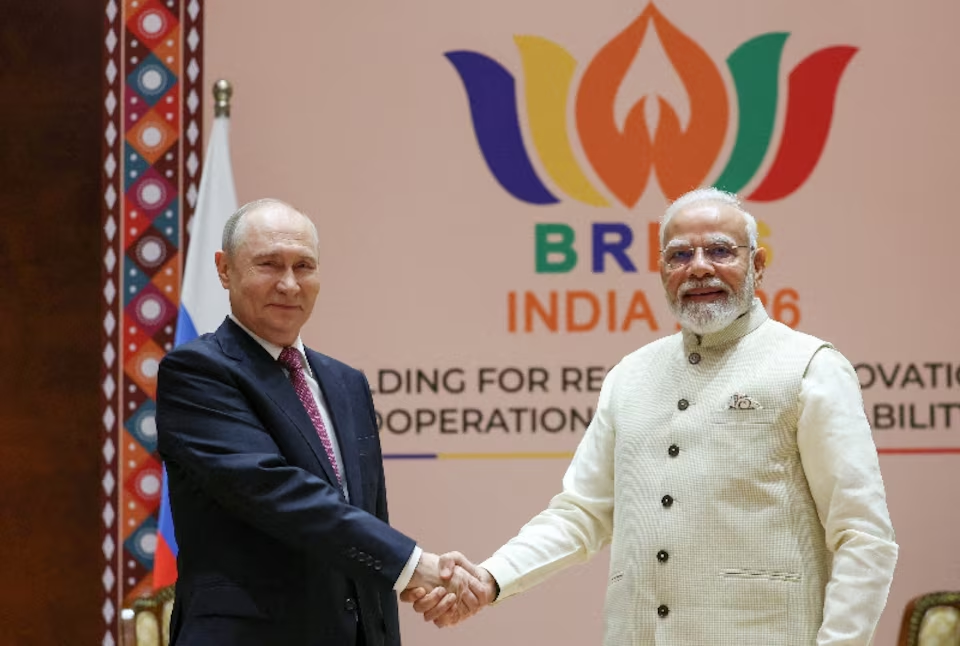
India and Russia have held their second high-level meeting in less than two weeks, with Prime Minister Narendra Modi and President Vladimir Putin meeting on the sidelines of the BRICS Summit, days after their August 31 meeting at the Shanghai Cooperation Organisation Summit.
At the Shanghai Cooperation Organisation (SCO) meeting, PM Modi told President Putin that the world “must move from endless war to an end of war for the benefit of humanity”.
According to TASS, Xi and Modi offered services for peace talks on Ukraine, and Putin welcomed their readiness, Kremlin spokesman Dmitry Peskov said.
This BRICS summit mainly covered Political, Economic, Defence, and Space. These meetings and their objectives suggest how India’s approach to Russia balances partnership with quiet pressure.
The Pew Research survey of August 2026 says that 36 per cent of Indians believe that Russia is India’s top ally.
India’s diplomacy with the US depends on trade and tariffs. New Delhi’s relationship with Beijing has started to change, with signs of improvement.
India keeps diplomatic ties open with all three countries, but Russia has the strategic continuity that New Delhi seeks from its allies and partners.
A key pillar of this diplomacy is economic ambition.
According to ANI, Modi and Putin have been building trade and transport link projects such as the Vladivostok-Chennai Maritime Corridor, the International North-South Transport Corridor and the Northern Sea Route. The aim is to trade USD 100 billion by 2030.
Putin used the summit to voice his sanctions-defiance case. He proposed an insurance mechanism and initiative for the grain market among BRICS members.
It was framed as a practical response to the sanctions on Russian crude oil exports imposed by the G7, European Union, and the UK.
“We have independent routes for moving capital, labour and technologies. In fact, we can operate regardless of outside pressure,” Putin told the gathering.
He also praised the functioning of the New Development Bank, saying it handles projects worth USD 140 billion.
What separates Russia’s relationship with India is the infrastructure commitments and economic plans that will outlast a summit or a leader’s term.
The relationship between New Delhi and Moscow is becoming warm and concrete, with cooperation extending to strategic sectors beyond diplomacy.
