

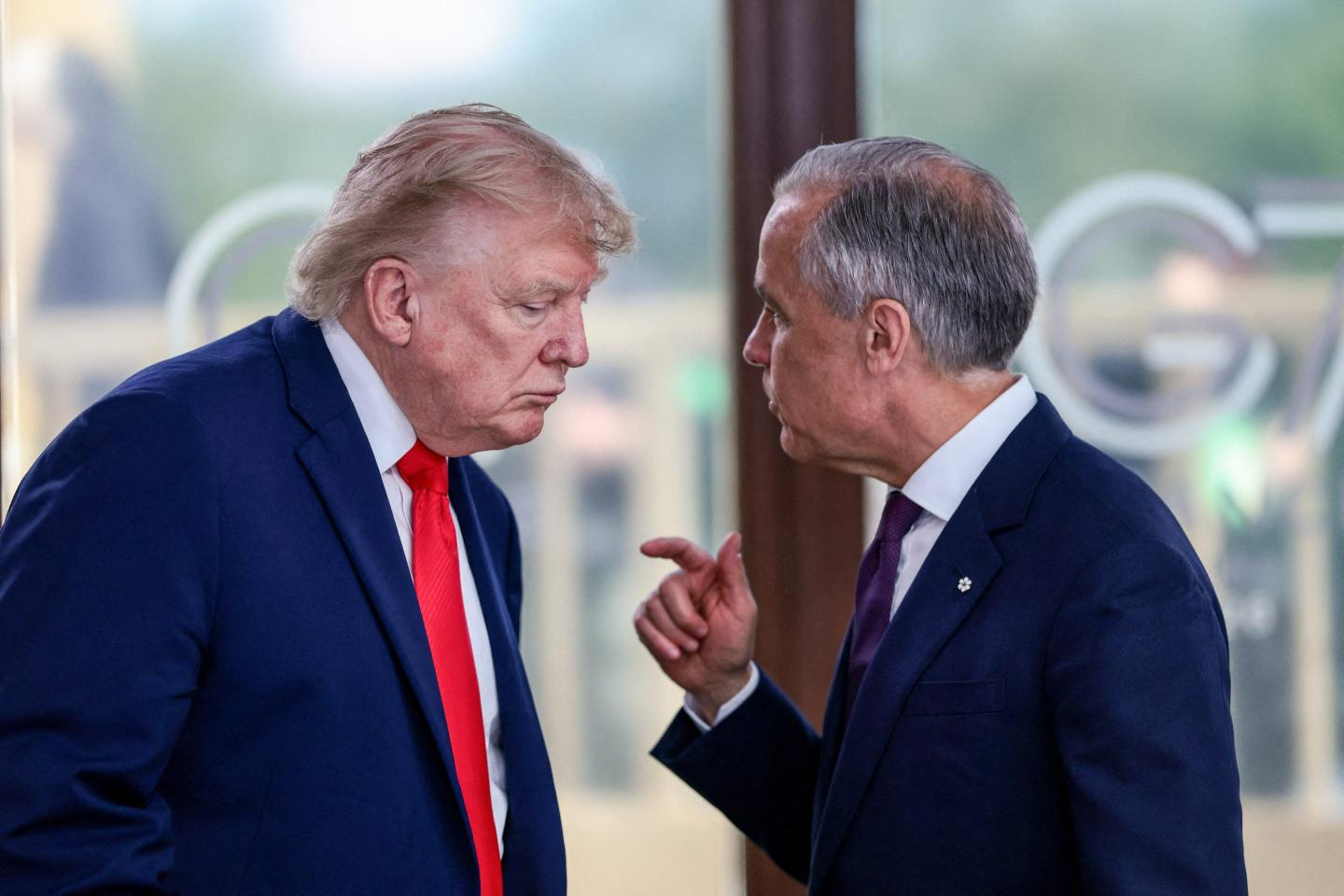
Canada has imposed a counter-tariff worth roughly USD 20 billion on US goods, escalating the trade dispute after Washington slapped a 50 per cent tariff on around USD 27.6 billion worth of Canadian imports here on September 8.
The US tariffs on cars, lumber, dairy, honey, beer, cement, and hockey sticks were met with Canada’s strategically selected goods, including steel, aluminium, dairy, farm equipment, plastics, electronics and appliances.
Canadian Prime Minister Mark Carney states that Canada is matching US tariffs “dollar for dollar”.
The trade war is escalating despite diplomatic efforts because trade talks between the two sides have stalled. Earlier, there were signals of de-escalation.
Carney said last week his government was ready to sign a trade deal that benefits both countries. On August 21, the trade talks collapsed. Last-minute changes to the proposed terms by the US were the reason, say authorities.
De-escalation could have reduced economic pressure, stopped retaliatory loops, and shaped trade relations for the future.
Trade experts said that the tariffs could raise unemployment, though the biggest concern is repeated retaliation and the escalation it would create.
Trevor Tombe, a professor of economics at the University of Calgary, estimates nearly 90,000 jobs could be lost because of the new hit.
“What we are worried about is an escalatory spiral,” said Michael Harvey, a member of Carney’s advisory committee on bilateral U.S. economic relations. “But at the same time, we totally understand that the prime minister needs to find areas of leverage,” he added.
The conflict also concerns the idea of a North American free trade agreement between the US, Canada and Mexico. The agreement is up for annual reviews after Trump declined to extend it for another decade.
However, not all Canada-US trade is subject to these tariffs. Goods under free trade agreements like the USMCA/CUSMA can still receive duty-free treatment, depending on product and applicable measure.
“If you have a business in that sector, you’ll feel it, and you won’t like it, but the broader economy should be fine. The bigger risk here is the cycle of retaliation that we’re in,” Brian Platt, Ottawa Bureau Chief, told Bloomberg.
Enacting tariffs is a complicated economic chain reaction with ripple effects that can lead to retaliation and trade wars, which hurt involved economies.
A trade war with a powerful economy such as the US has effects across the globe.
The scale of trade, along with resource scarcity in different countries, requires them to be aware and alert in their own policies.
When Canada raises tariffs on US steel and aluminium, producers can redirect their supply; this shift can change global prices.
Countries that depend on North American metal for construction and manufacturing would feel the ripple even when they’re not part of a fight.
Canada could also escalate the war further by restricting exports like energy and an important fertiliser ingredient known as potash, said Diamond Isinger, a former special advisor on Canada-US relations.
Canada’s tariff imposition suggests that Carney is trying to maintain economic pressure and avoid an all-out trade conflict.
The real conflict is over the jobs at risk, rising prices, and businesses that will suffer. With no talks on schedule and the possibility of further US retaliation, de-escalation seems improbable for now.
