

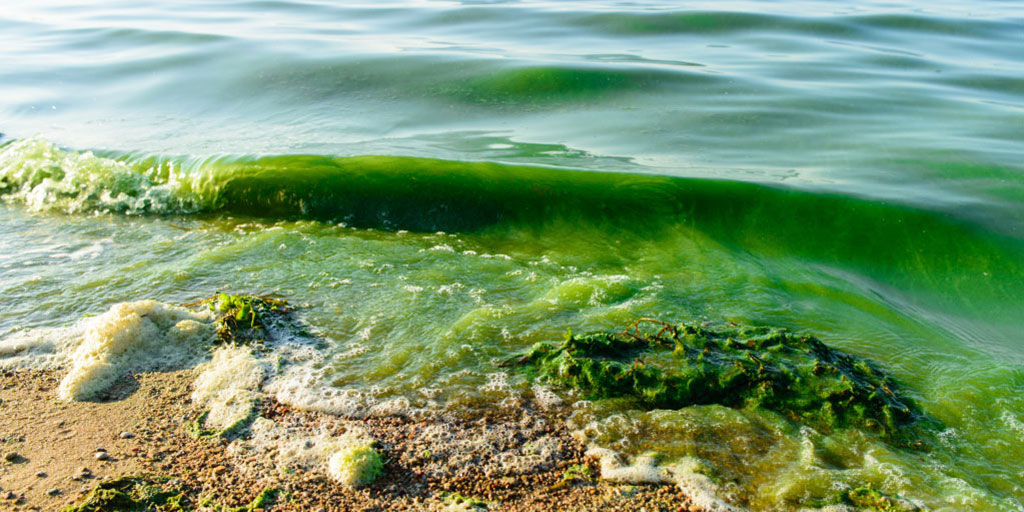
Two regions are grappling with a contaminated sea, and the price they’re paying is shaped by their governments’ choices. This week, that contamination reached Israel’s taps.
The crisis that got Israel’s attention
According to CNN’s reporting, five of Israel’s six major Mediterranean desalination plants together supply at least 65 per cent of the country’s drinking water, were knocked offline or forced into reduced operation after a massive algae bloom clogged their seawater intake systems.
“An extremely rare event” that “has never occurred before in Israel,” Mekorot spokesperson Lior Gutman told CNN.
“The bloom stretched more than a dozen miles: ‘the first time I saw something to this extent,” Edo Bar-Zeev, a water researcher at Ben-Gurion University who has tested the coast for two decades, told CNN.
Israel’s plants rely on reverse-osmosis membranes that filter seawater under high pressure. Algae and the compounds they produce can foul those membranes.
Michael Christopher Low, a historian of Middle Eastern infrastructure, said that when suspended material overwhelms a treatment system, it simply can’t keep up, and warned the episode is “causing considerable alarm and even some criticism that the system is too vulnerable to a dramatic disruption.”
The financial fallout has already started. Israel’s Water Authority raised emergency payments to privately run plants by nearly 50 per cent, an acknowledgement of the strain the crisis placed on infrastructure that is privately operated, Ynet reports.
What’s behind the bloom and why scientists disagree
Researchers have identified the organism as a cyanobacterium in the genus “Synechococcus”, though the exact species is still unconfirmed.
Marine ecologist Tamar Guy-Haim said that a bloom like this needs several things to align: warm water, strong sunlight, favorable currents, and a supply of nutrients such as nitrogen and phosphorus, and this is where the science splits.
I currently have “no other explanation except a pollution source in the southern Gaza Strip,” unusually warm Mediterranean water combined with sewage-borne nutrients and calm winds as “a perfect storm,” Dr Avner Gross said.
Noga Armi, head of the Israeli environmental group Zalul, went further, having said that “the scientific link is well established” between Gaza’s sewage and the bloom.
But other researchers are more cautious. Prof. Tamar Guy-Haim of Israel’s Oceanographic and Limnological Research Institute has said instead that the Nile Delta, where satellite imagery regularly shows algae-rich water tied to Egyptian agricultural runoff, is the likelier point of origin.
Once a bloom this large dies off, it consumes dissolved oxygen and blocks sunlight from reaching underwater plant life, creating low-oxygen conditions that stress the wider marine ecosystem, a consequence that doesn’t stop at any maritime boundary.
A sea and an aquifer that both ignore borders
As Palestinian water authorities and UNICEF indicate, Gaza’s wastewater infrastructure has been extensively damaged, and with treatment plants unable to function, untreated sewage estimated at tens of thousands of cubic meters daily flows directly into the Mediterranean or pools on land.
UN OCHA has documented this northward flow as far back as 2008, warning in a situation report that sewage “flows northward to Israeli coasts, including near the Ashkelon desalination plant.”
The two territories are connected at sea. According to researchers, the Coastal Aquifer Basin runs from Egypt’s Northern Sinai, through Gaza, and into Israel as a single hydrological system that doesn’t stop at a political boundary.
Assessments from EWASH and Gaza’s Coastal Municipalities Water Utility, tracked consistently since the early 2010s, found roughly 95 per cent of the water drawn from the aquifer in Gaza as unfit to drink.
Israel, for its part, leans on desalination precisely because it has little alternative. Calcalist reports that an arid climate and scarce natural freshwater make the country structurally dependent on a technology it has pioneered, which is exactly why this week’s disruption rattled officials as much as it did.
An asymmetric price for a shared sea
The war divides land along borders, but water and the sea recognise none. For Gaza, the consequences are immediate and severe: lost fishing grounds, a collapsing sewage system, and, compounded by restrictions on importing materials needed to repair that system, a public health crisis with few short-term fixes.
For Israel, the disruption has been costly and alarming but, so far, contained.
Israeli Energy Minister Eli Cohen said this week the country’s better-funded, more diversified water system, with emergency draws from the Sea of Galilee and groundwater wells, was already restoring most plants to operation.
Both sides are dealing with the same contaminated sea. Only one of them has the infrastructure and resources to absorb the hit.
